

As the rainy season between October and April comes to an end, so does another planting season at the Black Jaguar Foundation. With the arrival of the dry season, a new and essential phase of ecological restoration begins: monitoring and maintaining the areas restored over the past several months.
Even in this early stage, the transformation is already visible. Native seeds and seedlings are establishing themselves, vegetation cover is gradually returning to the soil, and previously degraded land is beginning to recover life, structure, and biodiversity.
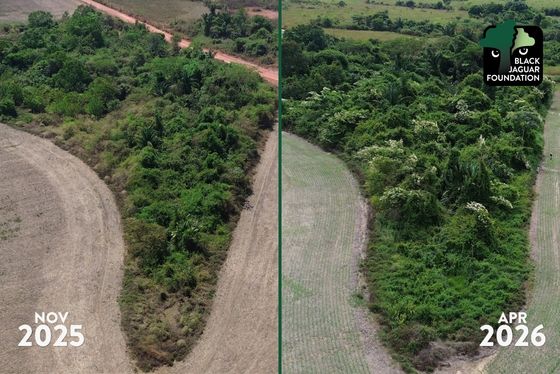
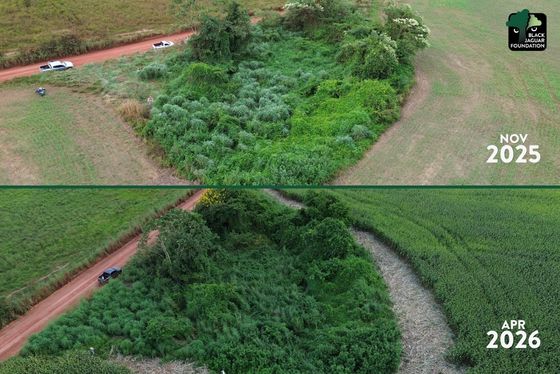
Field records and images captured across the Araguaia Biodiversity Corridor reveal the first stages of this regeneration process. Areas that were once degraded are slowly developing into young forests, helping reconnect the Amazon and Cerrado while supporting the recovery of ecosystems and biodiversity throughout the region.
Over the coming months, our field teams will continue monitoring these areas closely, carrying out maintenance activities and tracking the development of native species as the restored landscape continues to evolve.
Ecological restoration goes far beyond planting trees. It is a long-term process of regenerating ecosystems, rebuilding connections, and creating the conditions for nature to thrive once again.